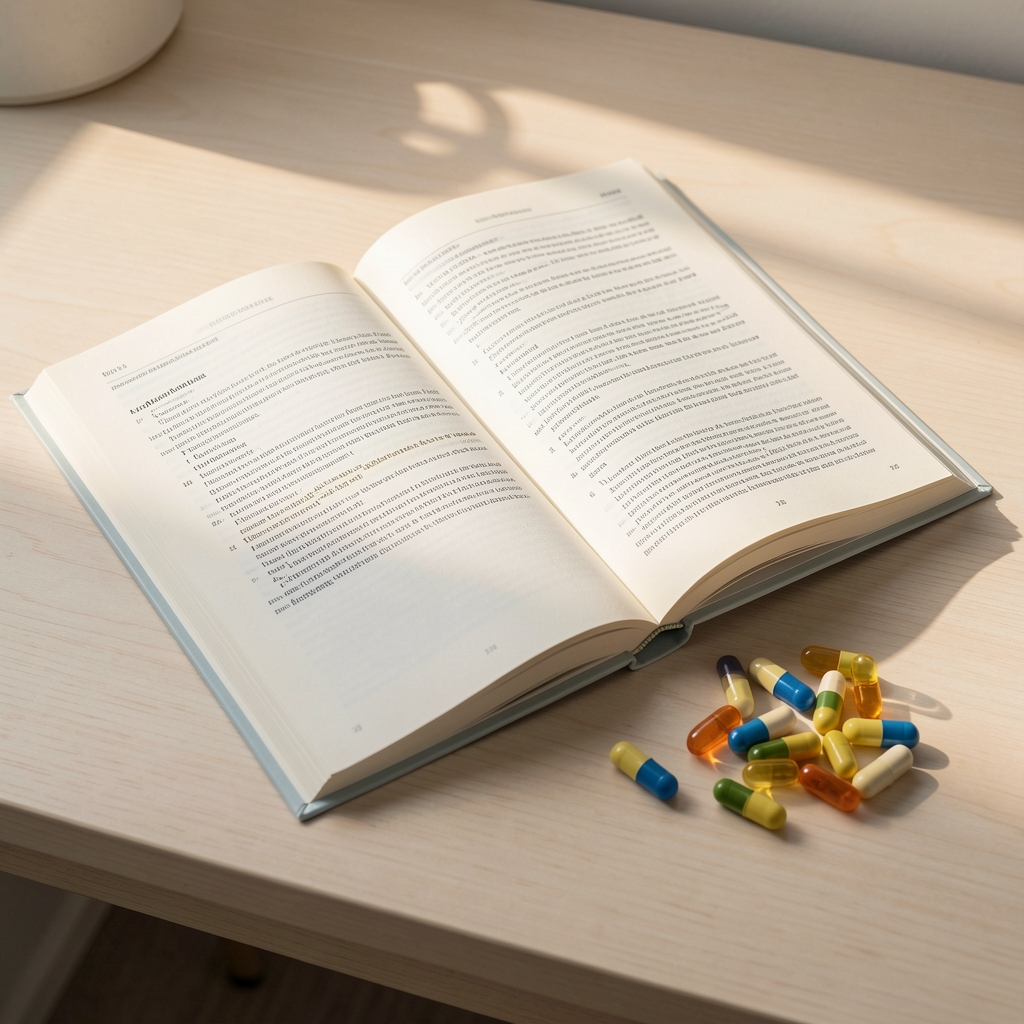
Jakarta, 2026 — Editorial workflow documentation, Daloben Letters office.
Daloben Letters operates under the following editorial principles: articles on men's supplement habits are reviewed by at least one second editor before publication, sources are cited where appropriate, corrections are noted publicly, and writers disclose any commercial relationships that could influence their selection of subject matter.
Every piece begins with a concrete observation: a pattern noticed in men's daily supplement routines, a question raised by published nutritional research, or a shift in how active men in Jakarta are approaching their daily wellness habits. Topic selection is driven by editorial curiosity, not commercial interest.
Topics are not selected because a product manufacturer wishes to draw attention to a particular ingredient. They are selected because a genuine editorial question has been identified and merits documented observation.
Content published by Daloben Letters is selected based on published nutritional research and reviewed for editorial accuracy by a second editor before publication. Writers are expected to locate primary sources — peer-reviewed nutritional literature, published dietary guidelines, or documented field observations — before committing a claim to the page.
Where strong published evidence exists, it is cited. Where the evidence base is limited or contested, this is noted clearly within the body of the article. The publication does not present uncertain findings as settled fact.
Daloben Letters uses a documentary-factual editorial voice: precise, observed, and free of marketing register. Writers are instructed to avoid outcome-promise phrasing and to frame every claim as an observation drawn from published evidence or documented practice. The reader is given information; they are not given instructions.
Where a supplement nutrient's role is described, the publication uses safe role descriptions drawn from nutritional literature — for example, noting that zinc contributes to daily nutritional balance and is found in meat, seeds, and legumes — rather than framing the nutrient as a solution to a specific condition.
No article is published without review by a second editor. This review checks factual accuracy against cited sources, confirms that the editorial voice is consistent with the publication's standards, and verifies that no unsupported claims have been made about nutritional outcomes.
The second editor also reviews for compliance with the publication's vocabulary standards, ensuring that no regulatory stop-language, health-outcome promises, or commercially motivated phrasing has entered the draft.
Writers disclose any commercial relationships before a piece is approved for publication. If a writer has a relationship with a supplement brand or nutritional product company, this is noted within the published article. Where no such relationship exists, no disclosure is required, but independence is assumed and maintained.
Corrections to published articles are handled transparently. If an error is identified after publication, a correction notice is added to the article clearly noting what was changed and when.
As published nutritional research evolves, some articles are updated to reflect new findings. When an article is substantively updated, the modification date is noted alongside the original publication date. Minor stylistic edits do not require date updates.
The publication's approach to men's daily supplement and nutritional habits is not static — it grows alongside the available evidence base and the observations gathered from the editorial team's ongoing work.
Daloben Letters holds editorial independence as a non-negotiable standard. No commercial sponsor directs or restricts editorial content. Every article reflects the writer's genuine observations and the publication's own selection criteria.
Claims made in editorial content are supported by published nutritional research wherever available. The publication identifies and notes the limits of the available evidence base rather than overstating what published research supports.
The publication documents what active men are doing with their daily supplement and nutrition routines. It does not prescribe what men should do. The distinction between observation and instruction is maintained across all content formats.
Daloben Letters is an independent editorial publication covering men's dietary supplement habits, daily nutrition awareness, and active lifestyle practices. The publication is not affiliated with any commercial, governmental, or institutional body.
Articles published on Daloben Letters are editorial in nature and reflect the writers' observations on men's dietary supplement habits and active lifestyle routines. The content is not intended as professional health advice. Readers with specific health concerns are encouraged to speak with a qualified health professional.
We recommend speaking with a qualified health or nutrition professional before introducing any new supplement or dietary change into your daily routine, particularly if you have any existing health considerations.